• Mind your delivery gap!

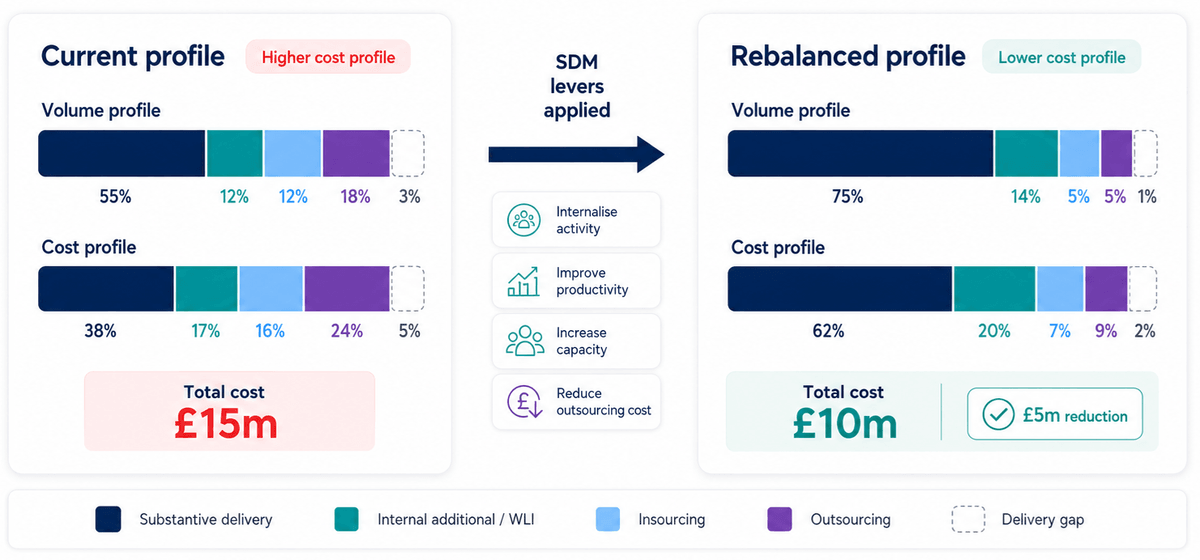
    Our software and services reduce NHS departments costs of delivery by plugging their delivery gaps in the most cost-effective way.

  • Responses to delivery gaps: descalating costs


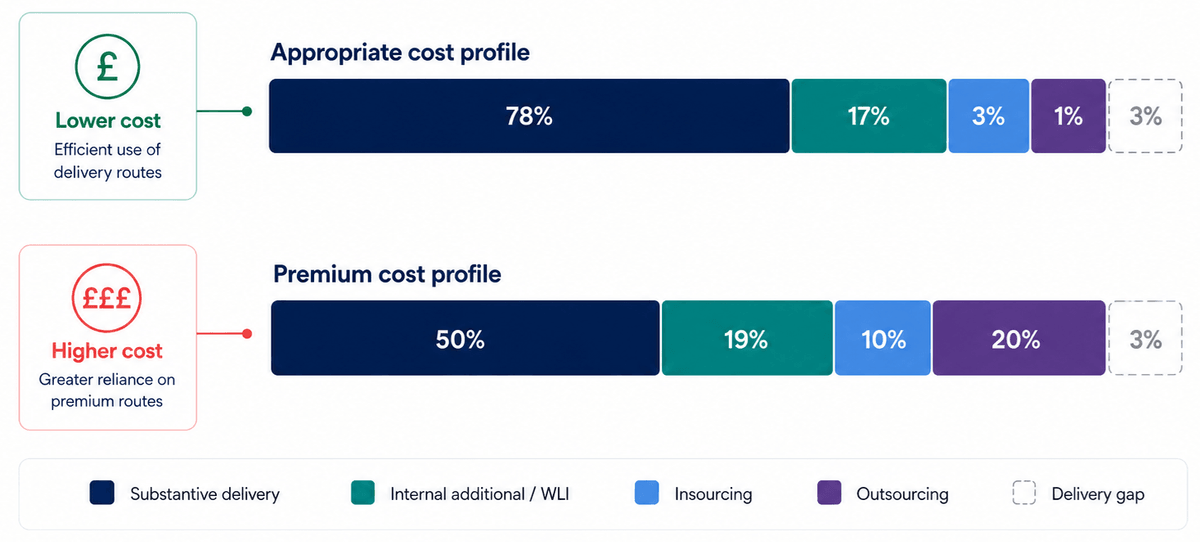
    Most NHS departments do not deliver enough activity to meet targets using
    substantive staff alone. To close the gap, services rely on additional activity

    often insourcing or outsourcing at high cost. Staffing Science helps

    departments reduce the cost and use of the more premium .

  • From Quick Wins to Sustained Cost Control

    We start with financial assurance, move to active monitoring, and ultimately

    help departments design out unnecessary premium spend.

    1

    Immediate cost savings: assurance & reconciliation services

    We start by saving you money immediately, without changing how your service runs. First, we run no-win-no-fee assurance services to esnure transactional integrity. This can reduce between 5-20% of your in/outsourcing costs.

    2

    On-going cost control

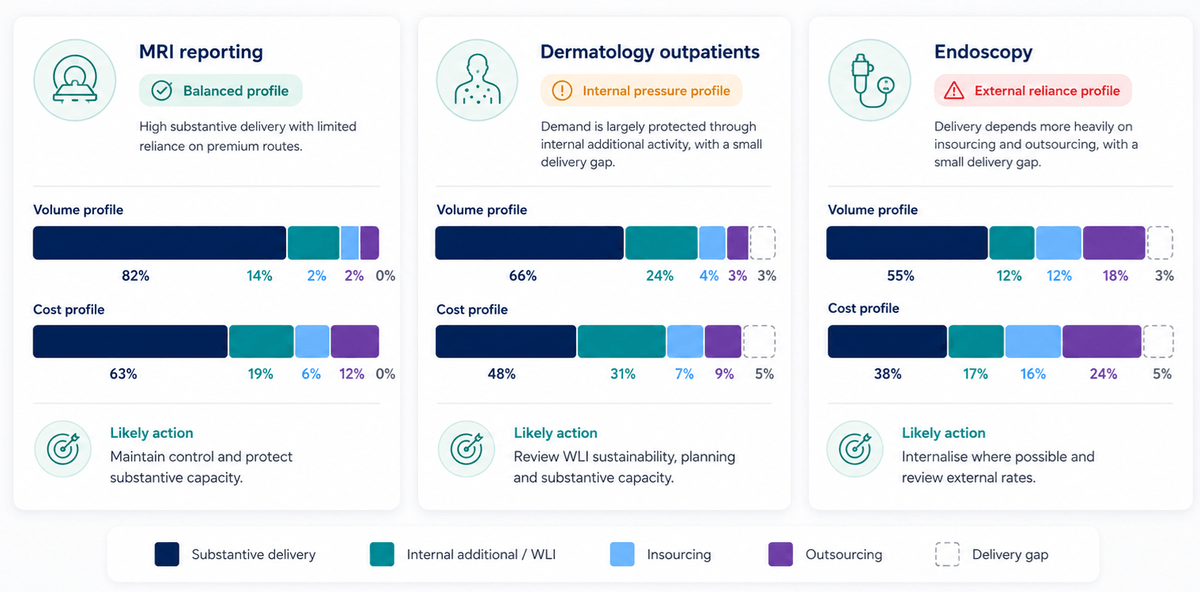
    Once transactional integrity is addressed, the next challenge is control. Most departments know they use outsourcing or additional activity — but not how much, when, why, or at what unit cost. Our Activity Sashboard gives clear, ongoing visibility of:

    • how delivery gaps are being filled
    • the balance between lower-cost and premium responses
    • unit costs and trends over time
    • supplier price variation and benchmarking

    This turns premium responses from an accepted necessity into something that can be seen, questioned, and governed.

    3

    Preventitive control through adaptive service design

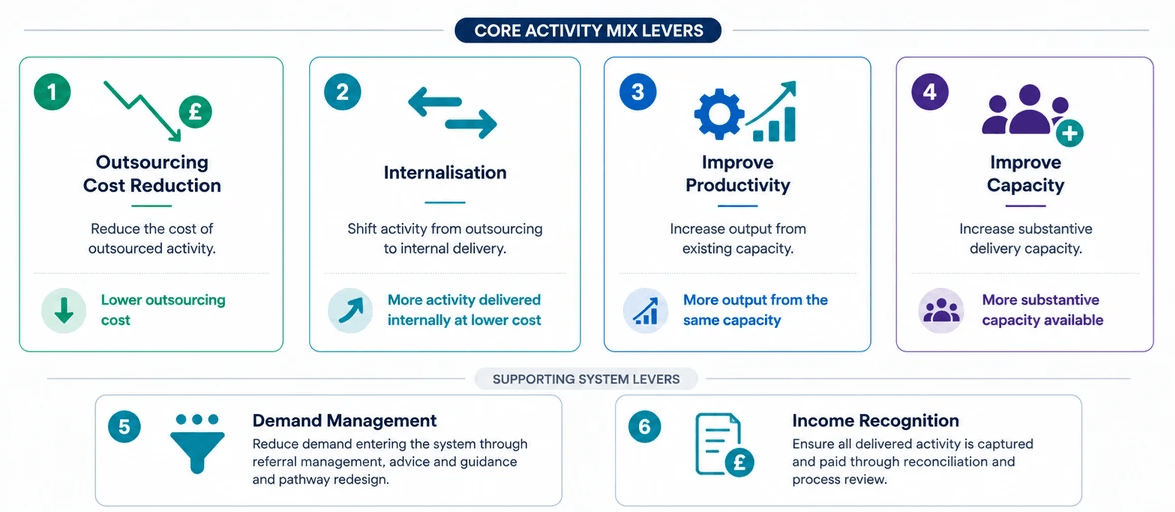
    Monitoring shows where premium responses are being used — but it doesn’t reduce the underlying need for them. The final step focuses on how the service is designed and adapted over time. By making the service delivery plan explicit and manageable, departments can:

    • focus substantive capacity on activity that is the most expensive to replace
    • respond earlier to emerging capacity gaps
    • rely less on high cost responses as pressure builds